IELTS Test: Your Comprehensive Guide to Its Components, Types, and Successful Preparation Strategies on Fahmi Stein Platform
Your Complete Guide to the IELTS Test
Discover the components and types of the IELTS test, learn how to prepare for it intelligently to achieve your target score, and understand how it can help you apply to international universities and scholarship programs.
The IELTS test is now one of the world’s most popular and widely accepted English-language examinations. It is an essential gateway for students who want to study at an international university, immigrate to an English-speaking country, or pursue a global career that requires proof of language proficiency.
Despite the popularity of the test and the large number of available resources, many Arab students still feel confused. What exactly is IELTS? What is the difference between its different versions? And how can you prepare effectively to achieve your target score within a reasonable period?
This article answers these questions and more.
1. What Is IELTS and Who Administers It?
IELTS stands for the International English Language Testing System. It is a standardized test designed to assess the English proficiency of non-native speakers in four core skills:
- Listening
- Reading
- Writing
- Speaking
The test is administered and overseen by three leading international organizations:
- The British Council
- IDP Education Australia
- Cambridge ESOL
This three-way partnership has made IELTS widely accepted by more than 10,000 institutions worldwide, including universities, governments, and employers across various sectors.
2. Why Do You Need IELTS?
IELTS is not simply a certificate added to your application. It is an objective and reliable demonstration of your actual English proficiency, and it is required in several important contexts.
International University Study
Most universities in the United Kingdom, Canada, Australia, and New Zealand, as well as many European universities, require a specific IELTS score for admission to undergraduate and postgraduate programs. The required score generally ranges from 6.0 to 7.5, depending on the university and field of study.
Immigration and Residency
Countries such as Canada, Australia, and the United Kingdom accept IELTS scores as part of the eligibility requirements for various immigration programs.
International Employment
Many multinational companies and international organizations require proof of English proficiency through IELTS as part of their employment requirements.
International Scholarships
An appropriate IELTS score is one of the essential elements of an international scholarship application. To learn more about the role of IELTS in scholarship applications and when it may be sufficient, read Do You Need SAT or IELTS for University Scholarships? The Complete Answer for Arab Students.
3. IELTS Components and Detailed Structure
IELTS consists of four main sections. Each section is scored on a scale from 0 to 9, and the overall score is calculated as the average of the four section scores. The four skills assessed by IELTS are Listening, Reading, Writing, and Speaking.idpielts
1. Listening
The Listening section lasts approximately 30 minutes and consists of four parts that gradually increase in difficulty.
The recordings include everyday conversations, academic lectures, and discussions involving multiple speakers. This section tests your ability to understand spoken English and identify precise information from recordings that are played only once.
2. Reading
The Reading section lasts 60 minutes and includes three long passages taken from books, magazines, and newspapers. The style may be academic or general, depending on the type of IELTS test you take.
This section tests your ability to understand texts, locate information, draw conclusions, and analyze content under real time pressure.
3. Writing
The Writing section lasts 60 minutes and consists of two writing tasks.
- Task 1: Describe a graph, chart, diagram, or map in at least 150 words.
- Task 2: Write an analytical essay or respond to a specific opinion in at least 250 words.
This section assesses your ability to organize ideas and express yourself clearly and accurately in writing.
4. Speaking
The Speaking section lasts between 11 and 14 minutes and is conducted face to face with a qualified examiner.
It consists of three parts:
- An introduction and general questions.
- An individual talk about a specific topic for approximately two minutes.
- An in-depth discussion related to the topic.
This section assesses fluency, pronunciation, coherence, and vocabulary range.
To learn how to deal with the most difficult parts of the test without wasting time or losing focus, read How to Deal with Difficult Questions in International Exams Without Losing Time or Focus.
4. IELTS Academic or General Training: Which One Is Right for You?
IELTS is offered in two versions. The Reading and Writing sections differ between the two versions, while the Listening and Speaking sections are the same.
IELTS Academic
The Academic version is designed for students who want to enter undergraduate or postgraduate programs at international universities. It is also suitable for professionals who want to enroll in recognized professional programs.
Its texts are more specialized and academic in nature.
IELTS General Training
The General Training version is designed for people who plan to immigrate to English-speaking countries such as Australia, Canada, or the United Kingdom. It may also be used for vocational training programs.
Its texts focus on everyday life and workplace situations.
Choosing the correct version is essential. Taking the wrong test may result in your application being rejected, even if you achieve a high score. Always check the requirements of your target university or program before registering.
5. IELTS Scoring System
Each IELTS skill is scored from 0 to 9. The four scores are then averaged to produce the Overall Band Score.
The average is rounded to the nearest half band or whole band.
Required scores vary depending on the university, major, and purpose of the test. Many universities in the United Kingdom, Australia, and Canada require an overall score between 6.0 and 7.0 for undergraduate programs and between 6.5 and 7.5 for master’s and doctoral programs.
6. How to Prepare for IELTS Effectively
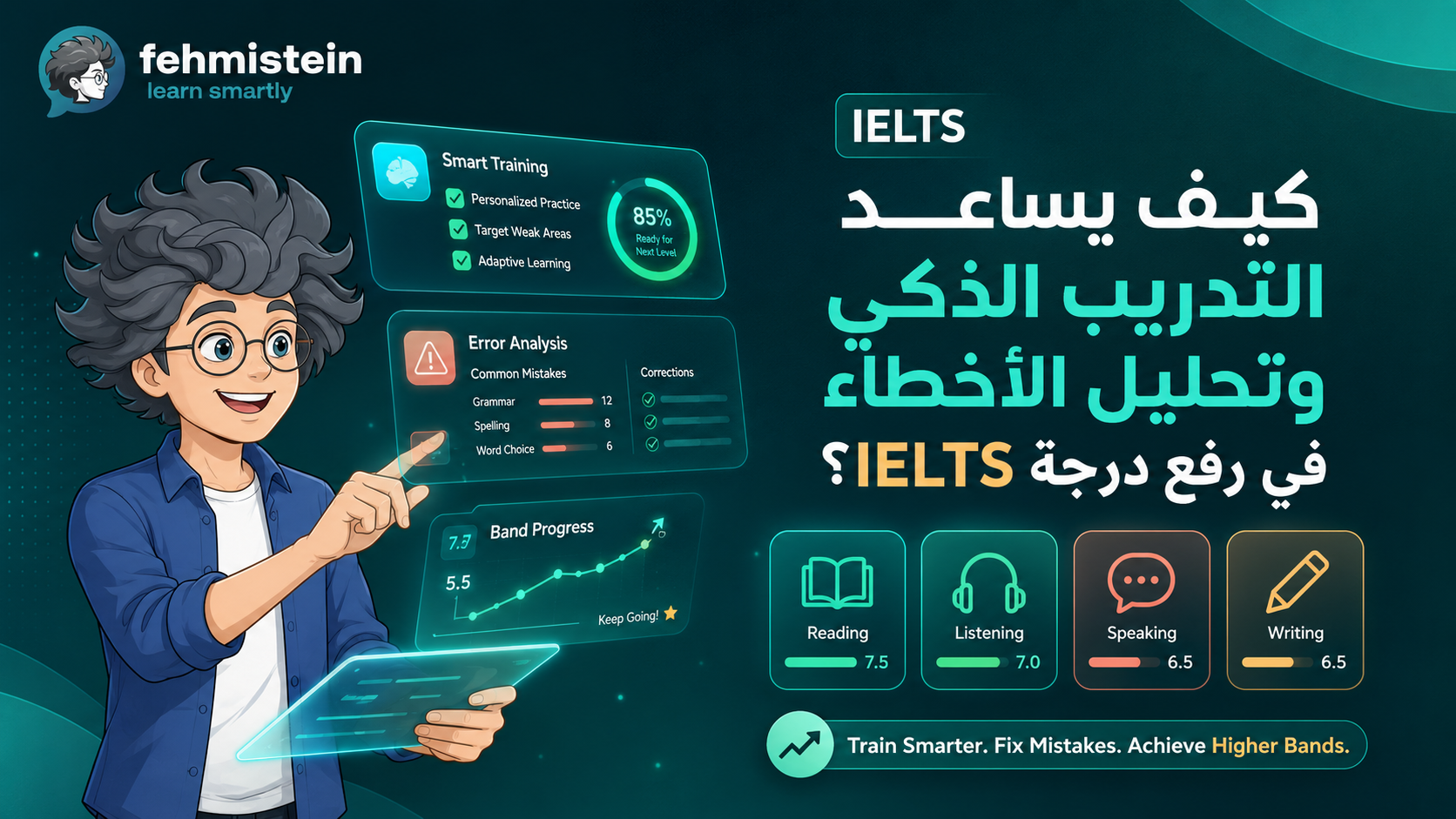
Smart IELTS preparation is different from simply studying general English. It requires a clear understanding of the test format, question types, and assessment criteria for each section.
Effective preparation usually combines level assessment, general language development, test-specific strategies, timed practice, and repeated evaluation.ef
Here are some of the most effective strategies:
- Start preparing at least three to six months before your target test date. Late preparation can create harmful pressure and lead to a lower score than you deserve.
- Assess your current level in all four skills before creating your study plan. Your effort should focus on actual weaknesses rather than skills you already perform well in.
- Practice English every day through a balanced combination of reading, listening, speaking, and writing. Neglecting one skill can reduce your overall score.
- Practice with realistic test models under actual time limits so that you become familiar with the test rhythm and avoid surprises on exam day.
- Obtain objective feedback on your writing and speaking from qualified teachers, specialists, or reliable assessment tools to identify your real weaknesses.
To learn when your language level is ready for the transition from general language learning to specialized IELTS and TOEFL preparation, read When Is Your Level Suitable for Moving from Language Learning to IELTS and TOEFL Preparation?.
7. Common IELTS Preparation Mistakes
Understanding these mistakes in advance can save you time and effort that might otherwise be spent in the wrong direction.
Believing That Good English Alone Is Enough
A strong language level does not automatically guarantee a high IELTS score. IELTS assesses specific test-taking skills that require separate practice in addition to general English ability.
To understand why some students lose marks despite having a good level of English, read Why Do Smart Students Lose High Scores in IELTS and TOEFL Despite Long Preparation?.
Neglecting Writing
Some students focus only on the other sections and ignore Writing, even though Writing carries the same overall weighting as the other sections.
Failing to Practice Time Management
If you do not practice managing your time within each section, you may fail to complete all the questions within the allotted time.
For guidance on managing your time effectively, read Time Is Not Your Enemy in International Exams: How to Manage Your Time in IELTS, TOEFL, and SAT.
Choosing the Wrong Test Type
Do not register without confirming whether your university or institution requires Academic or General Training IELTS.
Booking Too Early
Some students book their test before reaching an adequate preparation level because they are afraid that available dates will fill up.
It is better to choose your test date after assessing your readiness and creating a realistic preparation plan.
8. IELTS and International Scholarship Applications
An IELTS score is not only a university admission requirement. It is also an important part of an international scholarship application.
A high IELTS score demonstrates your academic readiness and reduces the risk of facing language difficulties after admission—something that matters greatly to admissions and scholarship committees.
A student whose IELTS score exceeds the scholarship requirement by half a band or a full band may have a stronger competitive position than a student who meets only the minimum requirement.
To learn how to build a balanced application that makes effective use of your IELTS score, read How to Build a Balanced University Scholarship Profile.
Frequently Asked Questions
How many times can I retake IELTS?
You can retake the test an unlimited number of times, and there is generally no restriction on retaking it. However, you should prepare adequately before each attempt to achieve genuine improvement.
How long is an IELTS score valid?
An IELTS score is generally valid for two years from the test date. After that period, it may no longer be accepted by most universities and institutions.
Is IELTS harder than TOEFL?
The issue is not simply one of difficulty. The two tests differ in format and style.
IELTS includes a face-to-face Speaking interview, while TOEFL is completed entirely on a computer. Your choice should depend on the requirements of your target university or program and your personal test-taking preferences.
Can I achieve a high IELTS score in three months?
This depends on your current level and target score. A student with a strong language foundation may be able to reach the target score within three to four months of intensive, well-organized preparation.
Conclusion: IELTS as Your Gateway to an International Future
IELTS is not simply a language test. It is a genuine investment in your academic and professional future.
The score you achieve does more than demonstrate your English level. It can open doors to international universities, overseas scholarships, and global employment opportunities.
The key to success is early, strategic preparation based on a clear understanding of the test format, question types, and effective time and energy management.
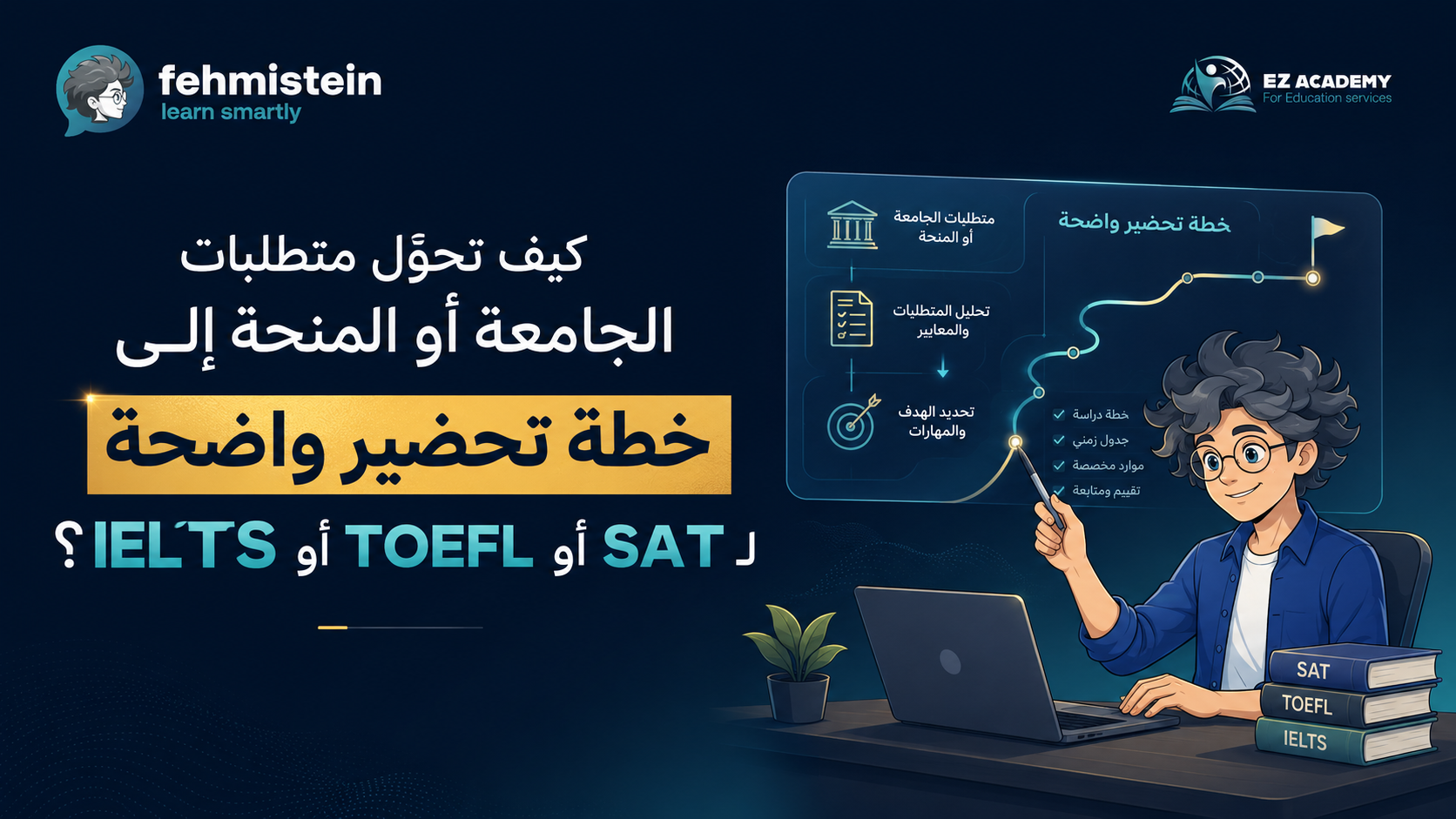
Start building your organized preparation journey today through the specialized EZ Academy platform.
Similar Articles